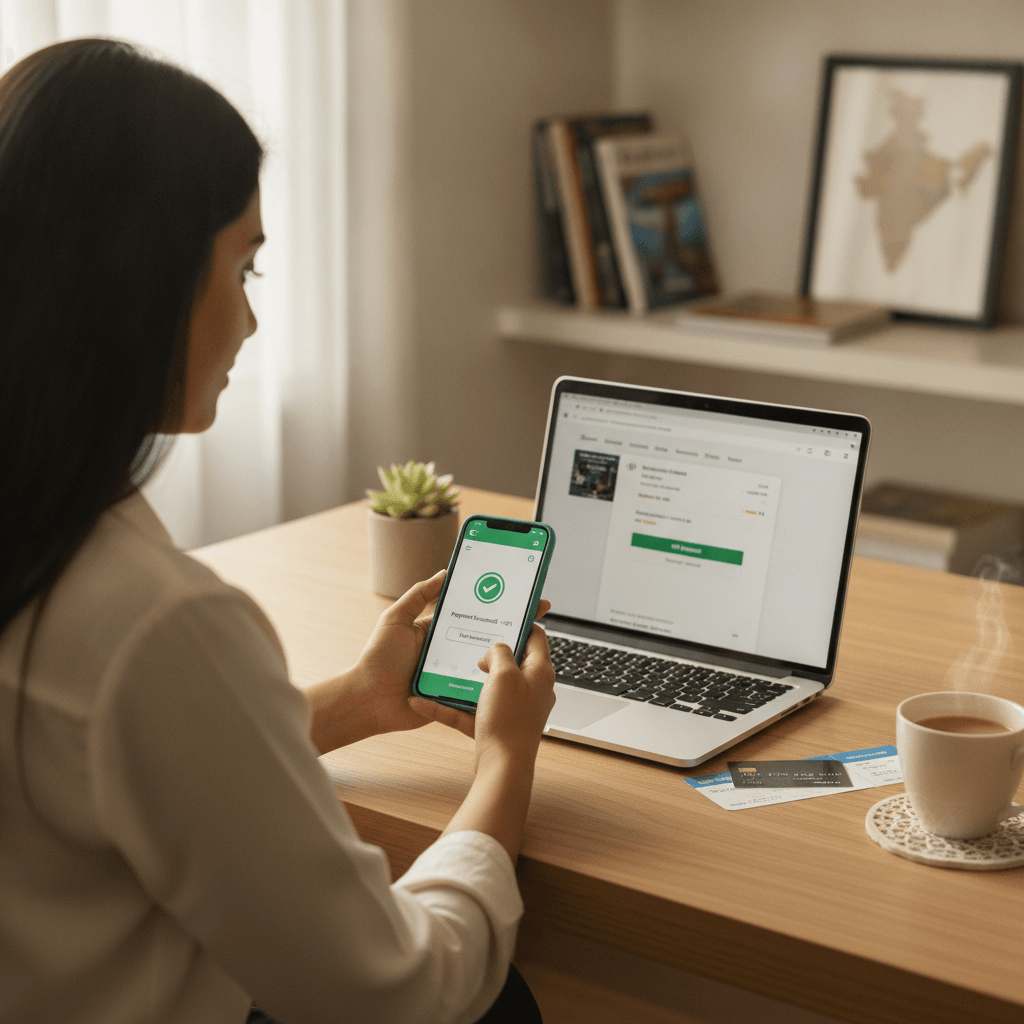

Short answer: almost everything except cash. If you're booking plane tickets online in India, you can generally pay with UPI, credit cards, debit cards, net banking, and a handful of digital wallets. Some platforms also offer EMI and pay-later options. When you search flights on most booking sites or airline apps, you'll see all of these at checkout. The more useful question is which one makes sense for your booking, because they're not all equal when it comes to fees, limits, refunds, and what happens when something goes wrong.
I've had payments fail at midnight, waited weeks for refunds, and paid convenience fees I didn't notice until the final screen. So here's what I wish someone had told me earlier about each option.
UPI: The Default for Most People Now
Honestly, UPI is what I use for most domestic tickets. You pick it at checkout, approve the request in Google Pay, PhonePe, Paytm, or your bank's app, and you're done in about ten seconds. No card details to type and no OTP waiting game.
A few things to know, though. UPI has transaction limits. The standard cap is usually around ₹1 lakh per transaction, but your bank might set a lower daily limit, especially if you've just added a new account or switched phones. That doesn't matter for a ₹4,500 Delhi–Mumbai ticket. It does matter if you're booking for a family of six during Diwali, when fares can climb fast.
The other thing is the collect request timeout. If you take too long to approve the request, it expires and the fare you were holding might be gone when you retry. So keep your UPI app open and ready before you hit pay, particularly on sale days when seats disappear in minutes.
On the plus side, UPI refunds tend to come back faster than card refunds in my experience. That's not guaranteed, but it's been the pattern for me.
Credit and Debit Cards: Still the Most Flexible
Cards are the most widely accepted airline ticket payment method, period. Visa, Mastercard, and RuPay work almost everywhere. Amex and Diners are accepted on most major airline sites and booking platforms, though occasionally a smaller site won't take them.
Credit cards are where you get the real perks. Here's why I still reach for mine on bigger bookings:
- EMI options. Many platforms offer EMI, sometimes no-cost EMI, on credit cards. That's handy for international trips or when you're bundling everything into one of the holiday packages and the total feels heavy.
- Bank offers. Flat discounts or cashback for specific bank cards show up constantly, especially on weekends and during sales. These can easily beat any wallet cashback.
- Reward points and airline miles. Travel cards, and co-branded airline cards in particular, can earn you serious value on flight spends.
- Chargeback protection. If a booking goes really wrong and you can't get a refund, raising a dispute with your card issuer is a genuine backup.
Debit cards work fine too, but check two things first. Online transactions need to be enabled, which many banks now switch off by default. And if you're booking on a foreign airline's website that bills in another currency, international usage has to be turned on. I've seen people get stuck at checkout simply because they'd never toggled this in their banking app.
One annoyance: some airlines and platforms charge a convenience fee per passenger, per sector, and it can vary by payment method. Always look at the final breakdown before you pay. Sometimes the cheapest-looking option isn't the cheapest once fees are added.
Net Banking, Wallets, and Pay Later
Net banking is supported by pretty much every major Indian bank. It's reliable, but it's also the clunkiest option. You get redirected to your bank's page, log in, approve, and get sent back. If your bank's site is slow or the session times out, you're starting over. I use it when I want to pay straight from an account that isn't linked to UPI, and that's about it.
Digital wallets like Paytm, Amazon Pay, and MobiKwik are accepted on many booking platforms. That's why the description says eligible digital wallets: which ones show up depends entirely on where you're booking. One site might take Amazon Pay but not MobiKwik, and an airline's own site might offer only one or two. Wallets make sense when there's a specific cashback offer running or you've got balance sitting there from a refund. The same logic applies when you book hotels, by the way, since wallet offers often stack better on accommodation than on flights.
Pay-later services like Simpl, LazyPay, and various bank-backed options are showing up at more checkouts. They're convenient, but I'd treat them like a credit card without the rewards. Miss a payment and the late fees aren't fun. Use them if you know exactly when you'll pay them off.
And cash? Some airline counters at airports still accept it, but don't plan around that. For online plane tickets booking, cash isn't really part of the picture anymore.
When Payments Fail (Because They Will, Eventually)
Here's the scenario everyone dreads: money gets debited, but no ticket shows up. It happens more than you'd think, especially during sales or when a bank's server is struggling.
Don't panic, and don't immediately retry. That's how people end up with two bookings or two debits. Here's what actually works:
- Check your email and SMS for a PNR or booking confirmation. Sometimes the ticket is issued but the confirmation page just didn't load.
- Look in the "My Bookings" section of the app or site you used.
- If there's truly no booking, the amount is usually auto-reversed to your source account within a few working days. Timelines vary by bank and payment method.
- If it's been longer than that, or you need the ticket urgently, contact the platform's help and support team with your transaction ID and UTR number (for UPI) or the bank reference number.
My personal rule is that if I'm booking something time-sensitive, I'll retry with a different payment method rather than the same one that just failed. If the first debit reverses, no harm done.
Refunds and Cancellations: Where Your Payment Choice Matters
This is the part people overlook. When you cancel a flight, the refund almost always goes back to the original payment source. Paid by credit card? It comes back to that card. Paid with a wallet? It goes back to the wallet, which means you'll probably have to spend it on that platform or go through a separate withdrawal process.
Card refunds can take several working days to reflect, sometimes longer depending on your bank. UPI is often quicker. If you used EMI, check how the cancellation affects your EMI plan, because interest or processing fees may not be fully reversed even when the ticket amount is.
Some airlines also issue credit shells or vouchers instead of cash refunds in certain situations, like schedule changes or specific fare types. Read the fare rules before you book, not after. And if you're spending a lot on an international trip or your plans are even slightly uncertain, adding travel insurance can cover things that a standard airline refund policy won't, like medical emergencies forcing you to cancel.
So, What Should You Actually Use?
Here's what works for me, and I think it's a sensible default for most people:
For quick domestic tickets under ₹20,000 or so, I use UPI. It's fast, there's rarely an extra fee, and refunds come back quickly. For international flights, big family bookings, or anything over UPI limits, I use a credit card, ideally one with a running bank offer or travel rewards. I only pick a wallet or pay-later option if there's a specific offer that makes it clearly cheaper.
Before you pay, take thirty seconds to compare the final price across two payment methods. Bank offers change constantly, and I've saved anywhere from ₹300 to ₹2,000 just by switching cards at checkout.
Once your ticket's sorted, the rest of the trip falls into place more easily. You can compare fares on flight booking, lock in a place to sleep through our villa stays if you want something more personal than a hotel, and pre-book airport cabs so you're not haggling at arrivals after a long flight. Pay smart, keep your transaction IDs handy, and you'll avoid most of the headaches that catch people out.