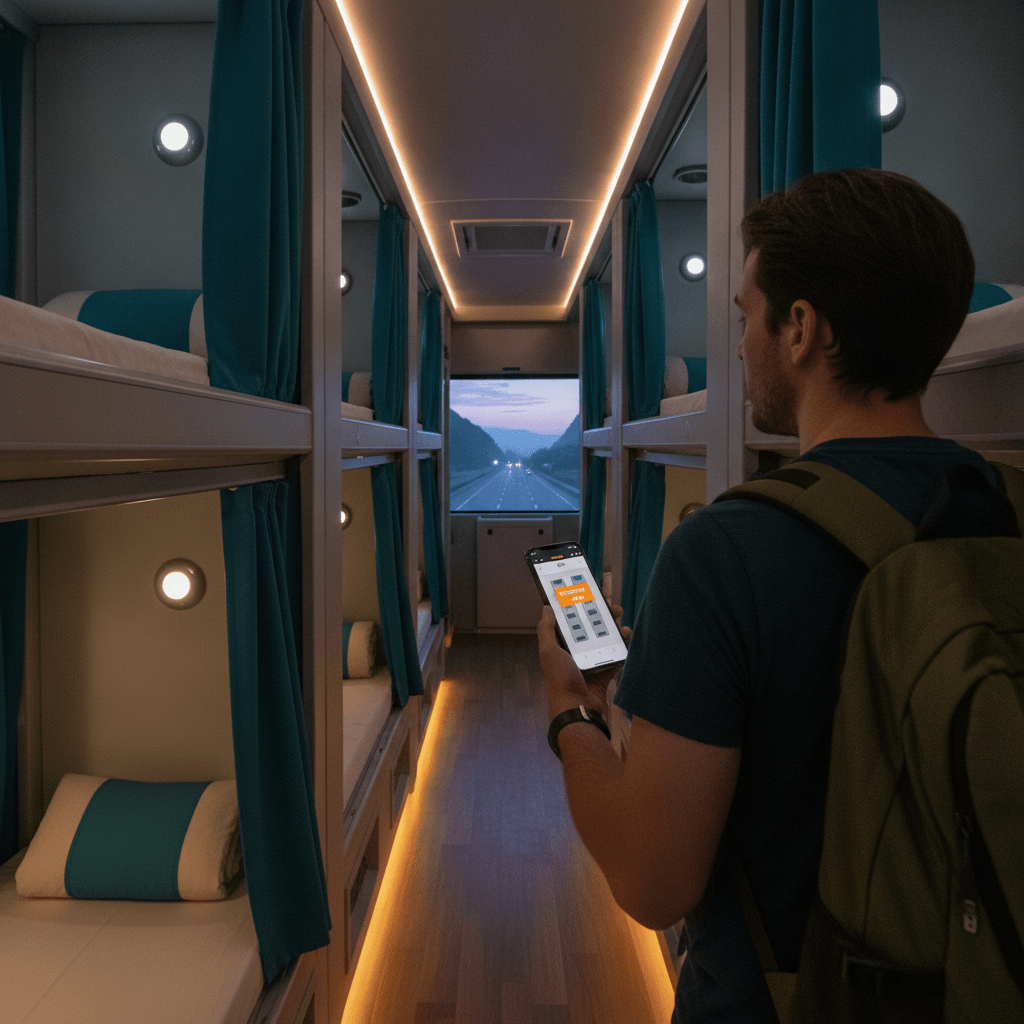

Okay, real talk — picking a sleeper bus seat isn't something most people think about until they're stuck in a terrible one for eight hours. If you're doing overnight bus travel, the berth you choose can genuinely make the difference between arriving refreshed and arriving with a stiff neck and zero sleep. So let's sort this out before you book your bus and regret it at 2am.
There's no single "best" seat for everyone. It depends on whether you get motion sick, how tall you are, whether you're traveling alone or with someone, and honestly — how much noise you can sleep through. But there are some clear patterns, and once you know them, sleeper bus seat selection gets a lot easier.
Upper Berth vs Lower Berth — Which One Should You Pick?
This is the first real decision you'll make, and people have strong opinions. Here's my honest breakdown.
Lower berths are more accessible — you're not climbing up anywhere, there's usually a small storage ledge nearby, and it's easier to get up for bathroom breaks. If you're a light sleeper or you tend to feel a little queasy on winding roads, lower is smarter. The downside? People sometimes bump into lower berths while walking through the aisle, and there's slightly less privacy since you're at eye level with everyone passing by.
Upper berths feel more like a cocoon. You're away from foot traffic, it's usually a bit quieter up there, and there's something kind of cozy about being tucked in higher up. That said, it gets warmer up top (heat rises, as physics keeps reminding us), and if you need the bathroom in the middle of the night, climbing down from an upper berth half-asleep is genuinely annoying. For taller travelers especially, upper berths can feel cramped at the ceiling.
I personally prefer lower berths for anything over six hours. The convenience just wins out for me. But if you're a sound sleeper who doesn't move much, upper berths are great.
Front, Middle, or Back of the Bus?
This matters more than people realize, and it has everything to do with how much you feel the road.
The front of the bus gives you a smoother ride because you're closer to the pivot point of the vehicle. Less swaying, less bumping. It's also closer to the driver, which some people find reassuring and others find distracting (you can often hear conversations and the occasional horn). If you get motion sickness even slightly, aim for the front third of the bus when you're doing your bus route search.
The back of the bus is where things get rough — literally. Every bump gets amplified at the rear. The last two or three rows of a sleeper bus are genuinely uncomfortable on most Indian highways, especially if you're on a route with patchwork roads. I'd avoid them unless everything else is sold out.
Middle berths are a decent compromise — not as smooth as the front, but nowhere near as bouncy as the back. For most people on a standard overnight route, middle of the bus works fine.
Window Side vs Aisle Side
In a sleeper configuration, this usually means whether your berth is on the left or right side of the bus — and it's worth thinking about.
Window-side berths give you something to lean against, which is great if you're a side-sleeper. You can also crack the window slightly for fresh air on some buses. The flip side is that in winter or on routes through the hills, that window can get cold. Also, direct sunlight in the early morning can wake you up pretty aggressively if you're on the wrong side depending on the direction of travel.
Aisle-side berths are easier to get in and out of, but you have zero buffer from the aisle. If someone brushes past or the curtain doesn't close properly, you'll know about it.
Honestly, if you're traveling with a partner or friend, booking both berths in the same pod (usually a double-wide berth on some buses) solves most of this — you get company and more space. Worth checking when you look at the layout during bus booking.
Seat Layout — Actually Look at It Before You Book
Most booking platforms now show you the seat layout visually, and you should absolutely use it. Don't just grab whatever's available. Here's what to look for:
- Is the berth near the bathroom? Being right next to it means door sounds, smells, and people hovering. Skip those.
- Is it near the driver's cabin? The front row can sometimes mean more noise from the engine and driver area, especially on older buses.
- Are there emergency exit rows near you? They can be slightly narrower or have an odd shape in some buses.
- Is it a 2+1 layout or a 2+2? Fewer berths per row means more space — 2+1 sleeper buses are noticeably more comfortable.
Taking two minutes to actually read the layout when you're checking popular bus routes can save you hours of discomfort. It sounds obvious but most people skip it and just click on the green squares.
Other Things That Actually Affect Your Sleep
Beyond the berth position, a few other factors are worth thinking about — especially for long overnight journeys.
Journey duration changes everything. For a four-hour hop, almost any berth is fine. For a 12-hour overnight haul, you want to be more strategic. The longer the journey, the more a bad seat compounds — small discomforts become big ones by hour seven.
Check whether the bus is a Volvo or a non-AC sleeper. Volvo sleeper buses generally have better suspension, better berth padding, and working AC — the ride quality difference is real. If you're booking a long-distance overnight trip, it's worth paying a little more for a better operator. You can compare options easily when you browse destination ideas and pair them with bus routes, or just check operator ratings directly.
Also — and I can't stress this enough — read recent traveler reviews for the specific bus operator, not just the route. The same route can have wildly different experiences depending on who's running the bus. Some operators are great, some have buses where the AC hasn't worked properly since 2019.
If you're someone who runs hot, claim an upper berth away from the engine side and keep a light layer handy. If you're prone to cold, lower berth near the middle of the bus is usually more temperature-stable. And if you're doing a mountain route with lots of hairpin bends, lower front berth — no debate.
So What's the Bottom Line?
Here's what I'd actually do: go for a lower berth, front-to-middle of the bus, window side — that combination covers most comfort bases for most travelers. If you're booking for two, grab a double-wide berth if the bus has them. Avoid the back rows and anything right next to the bathroom.
And genuinely, don't overthink it once you've made a reasonable choice. A decent bus with a decent operator matters as much as your specific berth. If you're planning a longer trip and want the whole thing sorted — transport, stays, the works — it's sometimes easier to look at holiday packages that bundle everything so you're not piecing it together yourself.
But if you're doing it yourself, take the two minutes to look at the seat map, avoid the last rows, and pick lower if you're not sure. You'll sleep better — literally.