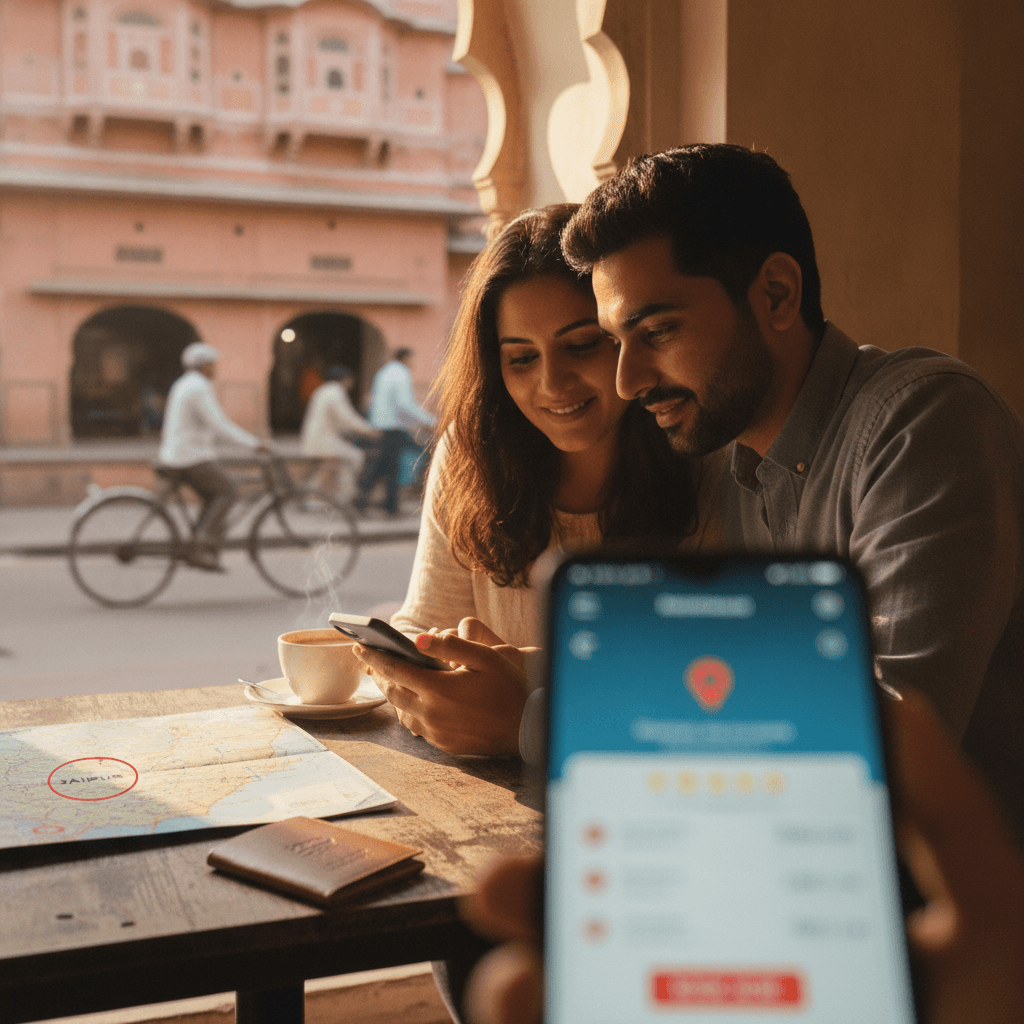

The Short Answer
If you just want names, the platforms most Indian travellers rely on for hotel booking are MakeMyTrip, Goibibo, Booking.com, Agoda, Cleartrip, Yatra, EaseMyTrip, and, for budget stays, OYO. Airbnb is the usual pick for homes and villas. But honestly, the "best" one changes depending on the trip. A business stay in Bengaluru, a weekend in Goa, and a family trip to Manali can each have a different winner. My real advice is to compare two or three options every time. You can start by searching hotels here and then check the same property elsewhere before you pay.
Here's the thing most "top 10" lists won't tell you. A lot of these sites share inventory, and some are owned by the same company. MakeMyTrip and Goibibo belong to the same group. Booking.com and Agoda are both part of Booking Holdings. So checking six sites doesn't always mean six different prices. Checking two or three smartly beats opening every tab on your browser. If you're mostly travelling within the country, browsing hotels by city gives you a quick sense of what a fair rate looks like before you start comparing.
How the Big Platforms Actually Compare
I've used most of these over the years. Here's my honest take, without the brochure language.
MakeMyTrip and Goibibo have the deepest coverage of Indian hotels, especially in smaller towns where the international sites get thin. Bank card offers show up often, and those can genuinely save money. The catch? The checkout page sometimes adds convenience fees or pre-ticked add-ons, so read the final amount carefully before you pay.
Booking.com is the one I trust most for free cancellation. Lots of properties offer "pay at hotel" or free cancellation until a day or two before check-in, and the filters are excellent. Prices in India aren't always the lowest, though, and some smaller guesthouses take forever to confirm special requests.
Agoda often comes in cheaper for international trips and sometimes for big Indian cities too. Watch out for prices shown without taxes in the search results. The number jumps at checkout more than you'd expect.
Cleartrip, Yatra, and EaseMyTrip are worth a look, especially if you're already booking flights there and can bundle. Their hotel selection is decent but not as wide as MakeMyTrip's in my experience.
OYO is fine for cheap, no-fuss nights. Quality varies wildly from property to property, so recent photos and reviews matter even more here.
Why the Same Room Shows Different Prices
This drives people crazy, and I get it. You find a room for ₹3,200 on one site and ₹3,900 on another. Same hotel, same dates, same room type. What's going on?
A few things. Some prices include breakfast and some don't. Some show taxes upfront while others add them at the end. Some rates are non-refundable, which is usually why they look cheaper. And then there are member-only or app-only prices that only appear once you log in. The "cheapest" result often isn't cheapest once you compare like with like.
Look, my rule is simple. Compare the final payable amount for the same room type with the same cancellation policy. That's it. When you run a hotel search, filter for free cancellation first, then sort by price. You'd be surprised how often paying ₹200 more for flexibility saves you a lot of stress later.
Timing matters too. For Indian hotels, booking two to four weeks out usually gets good rates in non-peak months. During Diwali, Christmas–New Year, or long weekends in hill stations and Goa, book much earlier. Prices can double and the good properties sell out fast. Last-minute deals do exist, but I wouldn't bet a family holiday on them.
Reviews: Which Ones Should You Actually Trust?
Hotel reviews are where a lot of booking mistakes happen. A 4.3 rating sounds great until you notice most of the reviews are from 2019.
Here's what works for me. I sort reviews by most recent and read the last 10–15. I skip the five-star gushing and the one-star rants and go straight to the three- and four-star ones, because that's where people get specific. Things like "rooms are clean but the Wi-Fi drops" or "lovely staff, very noisy road." I also check whether the hotel replies to complaints. A property that responds politely to criticism usually cares about fixing problems.
Booking.com only lets people who actually stayed leave reviews, which helps. Google reviews are useful for a second opinion, especially for traveller photos that haven't been edited to look perfect. If the guest photos and the hotel's own photos look like two different buildings, that tells you something.
Budget vs. Luxury: Where Each Platform Shines
For budget trips under ₹2,000 a night, I'd lean toward MakeMyTrip, Goibibo, or OYO, mostly because their coverage of small Indian hotels is so wide. Just be extra careful about location. A cheap room that's an hour from everything isn't a deal once you add up auto and cab fares.
Mid-range, roughly ₹3,000 to ₹8,000, is where comparison really pays off. This is the sweet spot where Booking.com, Agoda, and the Indian platforms all compete, and prices swing the most between sites.
For luxury properties like the Taj, Oberoi, and Leela, or boutique palace hotels in Rajasthan, don't ignore booking directly with the hotel. Direct rates sometimes include perks like breakfast, upgrades, or late checkout that third-party sites can't match. That said, curated platforms can surface special packages too. If that's your style, it's worth browsing ultra luxury stays to see what's on offer before you commit.
And if a hotel isn't quite right for the trip, say a big group, a long stay, or a quiet hill-town escape, a private villa or homestay can be better value. Have a look at villas and homestays as an alternative. For a group of six, one villa often costs less than three hotel rooms.
What I Actually Do Before I Hit "Book"
I'm not going to pretend I follow a perfect system every time, but this is roughly my routine when booking hotels in India:
- Shortlist two or three hotels in the area I actually want to be in.
- Compare the final price, with taxes, on two or three platforms.
- Pick the option with free cancellation unless the non-refundable saving is really big.
- Check recent reviews and guest photos.
- Screenshot the confirmation and call or WhatsApp the hotel a few days before to confirm the booking exists. Rare, but booking mismatches do happen.
That last step sounds paranoid, but it has saved me more than once, especially with smaller properties.
One more thing. If you're sorting out transport anyway, bundling can be cheaper than booking separately. Pairing your flight booking with your stay, or going for a full holiday package, often unlocks rates you won't find by booking each piece on its own. It also means one place to deal with if plans change.
And if something goes wrong, like a wrong room, a refund delay, or a hotel that claims it never got your booking, don't just fume about it. Reach out to customer support on the platform you used, keep your screenshots handy, and push for a fix. Good platforms do sort it out.
So, which online service is the best? There isn't one perfect answer. The best one is the one that gives you the right room at a fair final price, with a cancellation policy you can live with. Compare a little, read reviews properly, and you'll do better than most people. When you're ready, start with a quick look at hotels for your dates and go from there.