
So you asked me the other day if it’s even worth planning a big international trip right now. I totally get the hesitation. You turn on the news, and it feels like the whole map is just a giant red flag. 2026 has been a lot to process, to put it mildly. And frankly, trying to figure out how global conflicts impact travel isn't exactly the fun part of building an itinerary. It sucks to think about, but it's the reality we're dealing with.
Let's just be honest—the map looks different this year. But people are still traveling, I'm still traveling, and you definitely should too. You just have to be a bit more strategic about your choices. I thought I’d write this all down for you because I know you’ve been stressing about flights and where to stay. Here is what is actually happening on the ground and how you can plan around it.
The headache of actually getting there
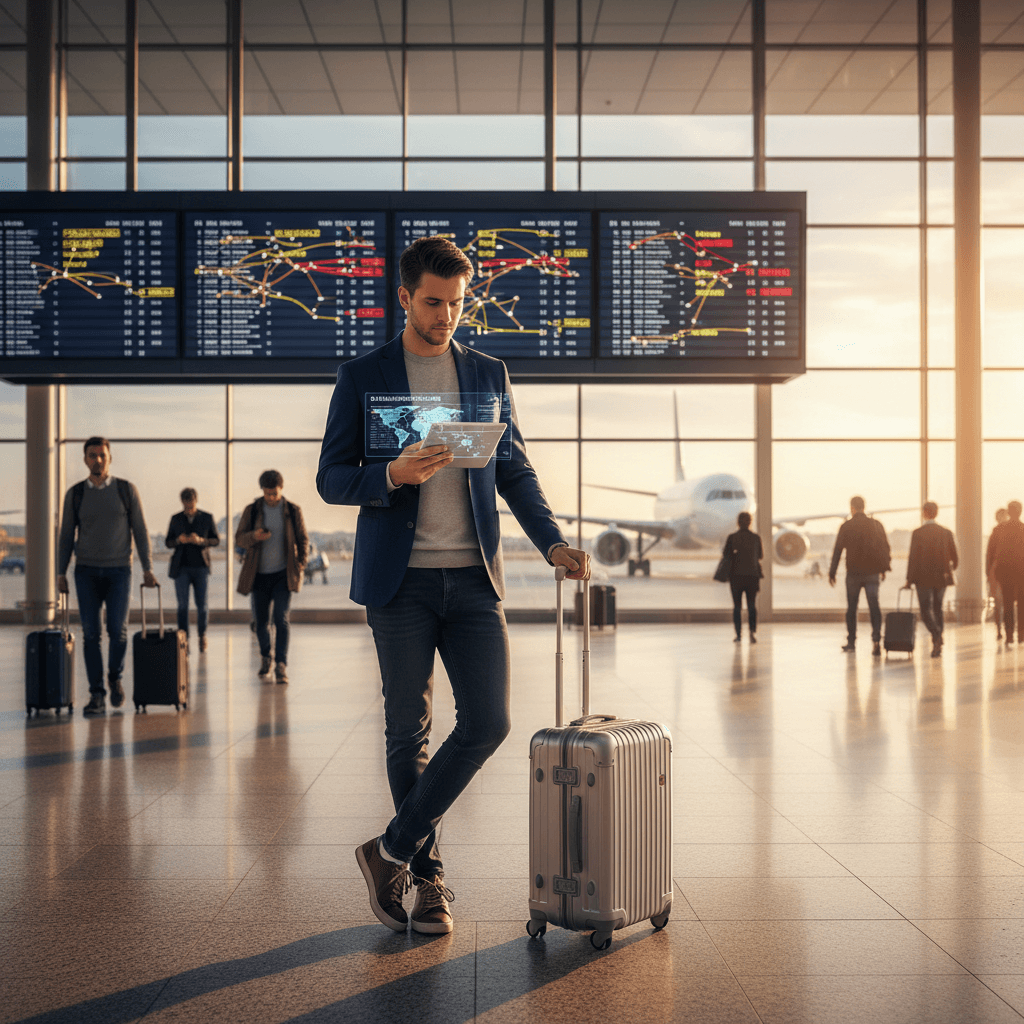
Let's start with the actual movement part, because this is where you'll feel the friction first. The impact of war on tourism usually hits the airlines before anything else. Airspace closures are a huge deal right now. If you're flying across continents, your plane might have to detour around massive chunks of restricted airspace.
What does that mean for you? Well, a flight that used to take nine hours might now take twelve or thirteen. Longer flights mean the airlines are burning way more fuel. And who pays for that? We do. Ticket prices are definitely feeling the squeeze, and layovers are getting weirder as airlines scramble to find new hub cities.
Because of this mess in the sky, I've noticed a massive shift back to ground transport wherever possible. Seriously, look into trains. If you’re in Europe or parts of Asia, the rail networks are basically saving the day right now. High-speed trains bypass all the airspace drama, and honestly, you don't have to deal with the anxiety of sudden flight cancellations. The security lines at train stations are getting a bit longer because everyone is catching on to this, but it’s still way less stressful than an airport.
Even intercity buses are having a bit of a moment. I know, taking a long-haul bus doesn't sound glamorous. But the operators have really stepped up their game in 2026 with better Wi-Fi and actual legroom. If a flight gets grounded because of sudden geopolitical tensions, having a backup ticket on an overnight bus can literally save your entire trip. It's happened to me twice this year.
Where everyone is sleeping (and what it costs)
Okay, let's talk about where you're staying, because the way people book accommodations has completely flipped. When we talk about how war affects travel industry trends, the biggest thing I've noticed is the "safe haven" effect.
Basically, a lot of people are avoiding regions near conflict zones entirely. This means the countries that are deemed "safe" and neutral are getting absolutely flooded with tourists. It's simple supply and demand, but it's making booking a real headache.
If you're looking for budget hotels in alternative hotspots—places that are far away from any headlines—you're going to notice that prices are weirdly high. The demand is just insane. Budget spots are getting away with charging mid-range prices, and sometimes the quality just isn't keeping up. I stayed at a supposedly affordable place last month, and they had completely cut their breakfast service and reduced housekeeping just to manage their overhead costs. You're paying more and getting a bit less.
On the complete opposite end of the spectrum, ultra luxury hotels are leaning hard into the "seclusion" angle. If you have the cash to burn, these five-star resorts are basically marketing themselves as isolated fortresses of peace. They are charging a massive premium for privacy, security, and distance from the rest of the world. It's wild to see, but if you're dropping that kind of money, I guess peace of mind is the ultimate luxury amenity right now.
For you, though, since I know you're dragging the kids along, you really need to focus on family friendly hotels with ironclad cancellation policies. Travel during global conflicts requires flexibility above absolutely everything else. Do not book a non-refundable room this year just to save fifty bucks. It is never worth the stress. Look for places that let you cancel up to 24 hours in advance without jumping through hoops.
Also, another tip: double-check that the family resorts you’re looking at haven't quietly closed their kids' clubs or pools. Because of border changes and immigration restrictions, a lot of hotels are facing severe staffing shortages. You don't want to show up expecting a break only to find out the childcare center is closed indefinitely.
Getting around once you land
Once you actually make it to your destination, you still have to navigate the local ground game. I highly recommend mapping out your daily transport before you arrive.
Global oil markets are notoriously jittery right now. When things flare up internationally, fuel prices spike almost instantly, even if the conflict is half a world away. This means relying on cabs everywhere is going to blow through your travel budget faster than you think. Taxi meters in a lot of major tourist cities have been adjusted way up to compensate for gas prices. Rideshares are doing the exact same thing with near-constant surge pricing.
Instead, try to figure out the local buses and subways. Public transit is usually subsidized by the local government, so the fares stay pretty stable even when the world is economically chaotic. Plus, taking local buses is honestly one of the best ways to actually see a city rather than just tunneling beneath it or zooming past it in the back of an Uber.
If you do need a cab from the airport to your hotel with all your luggage, pre-book a fixed-rate transfer. Do not rely on negotiating with a taxi driver when you're exhausted from a 14-hour rerouted flight. Just pay upfront and save yourself the headache.
The unspoken reality of travel right now
Here's the thing that the shiny travel brochures won't tell you: the vibe in some places is just different right now. You can feel the global conflict travel impact even in countries that are thousands of miles away from any actual fighting.
Supply chains are a total mess globally. You might book a really nice boutique hotel and find out their restaurant menu is slashed in half because they can't import certain ingredients anymore. Or you might notice that popular tourist sites are operating with reduced hours. It's annoying, yes, but it's just part of the landscape.
This brings me to the least fun topic: travel insurance. I used to be one of those people who skipped it because I figured the odds of something going wrong were so low. Now? I wouldn't cross a border without it. But you really have to read the fine print.
A lot of standard insurance policies have "act of war" exclusions buried in the terms and conditions. You need to explicitly ask the provider how they handle cancellations if a region suddenly becomes politically unstable. Getting Cancel For Any Reason (CFAR) coverage is expensive, but I think it's essentially mandatory if you're dropping serious money on a trip this year.
Keeping it all in perspective
I know I just threw a lot of heavy stuff at you. I'm not telling you all this to scare you off your trip. Actually, it's the exact opposite. I want you to go, but I want you to go with your eyes wide open.
The global conflict travel impact isn't about the world ending; it’s just about the travel industry adapting to a really bumpy, unpredictable road. Airlines adapt, hotels adapt, and as travelers, we just have to adapt too.
If you go in expecting everything to run like clockwork, you're going to end up frustrated. Your train might get delayed because of enhanced border checks. Your flight path might look completely illogical on the seatback screen. Your budget hotel might feel a little rough around the edges because they are stretched thin.
But despite all of that, you're still going to have those amazing, quiet moments that make travel worth the hassle. You'll still find incredible food, meet great people, and get a break from your normal routine. Just pack a little extra patience, pad your daily budget for unexpected cab rides, and make sure your accommodation lets you bail if your plans need to pivot.
Give me a call this weekend when you have some free time. We can actually look at some specific flight routes for your dates and see what makes the most sense. We'll figure it out together!