Let's talk about Bologna. You know how everyone goes to Italy and immediately heads to Venice, Rome, or Florence? They completely skip the Emilia-Romagna region. Their loss, honestly. Bologna is just... real. It's a working city filled with students, incredible architecture, and the absolute best food in the entire country. Yeah, I said it. Better than Naples. Better than Rome.
So, when should you go? The best time to visit bologna italy is probably late April through May, or September and October. Why? Here's why. Summer gets hot. Really hot. We're talking 35°C to 40°C in July and August, and since it's inland, there's zero ocean breeze to save you. Plus, a lot of the local shops close up in August because Italians take their annual vacation (Ferragosto). If you show up then, half the family-run trattorias will have a "chiuso" sign on the door. Winter is cold and damp, usually hovering around 2°C to 5°C in January. But honestly, eating a massive plate of hot tortellini in brodo when it's freezing outside? Pretty great.
If you're looking for a solid bologna city guide, the first thing you need to understand is the layout. The historical center is basically wrapped inside a ring road. If you're trying to figure out where to stay in bologna, just stick inside that ring road. Everything you actually want to see is right there. You don't need a car. Seriously, don't rent a car here. The traffic zones (ZTL) will hit you with massive fines if you drive down the wrong street. Just walk. The whole city is connected by these arched walkways called porticoes. There are about 40 kilometers of them just in the city center. It means you can walk around in a pouring rainstorm and barely get a drop on you.
Okay, let's get to the main reason you're here. The food. Any decent bologna italy guide is going to talk about "La Grassa" (The Fat One). That's the city's nickname. If you want to dive right in, booking a food tour bologna italy style is probably the smartest money you'll spend on your trip. Expect to pay around €70 to €100 for a good one. They'll take you through the Quadrilatero. It's this grid of narrow, medieval streets right next to Piazza Maggiore. You'll see shop windows stuffed with massive mortadella sausages, wheels of Parmigiano Reggiano, and fresh tortellini. And please, whatever you do, don't ask for spaghetti bolognese. It doesn't exist here. It's called Tagliatelle al Ragù, and it's life-changing. If you're hunting for the best restaurants in bologna, avoid anything with pictures on the menu. Go to places like Osteria dell'Orsa instead. You can get a huge plate of ragù for about €10. There will be a line out the door, but it moves fast.
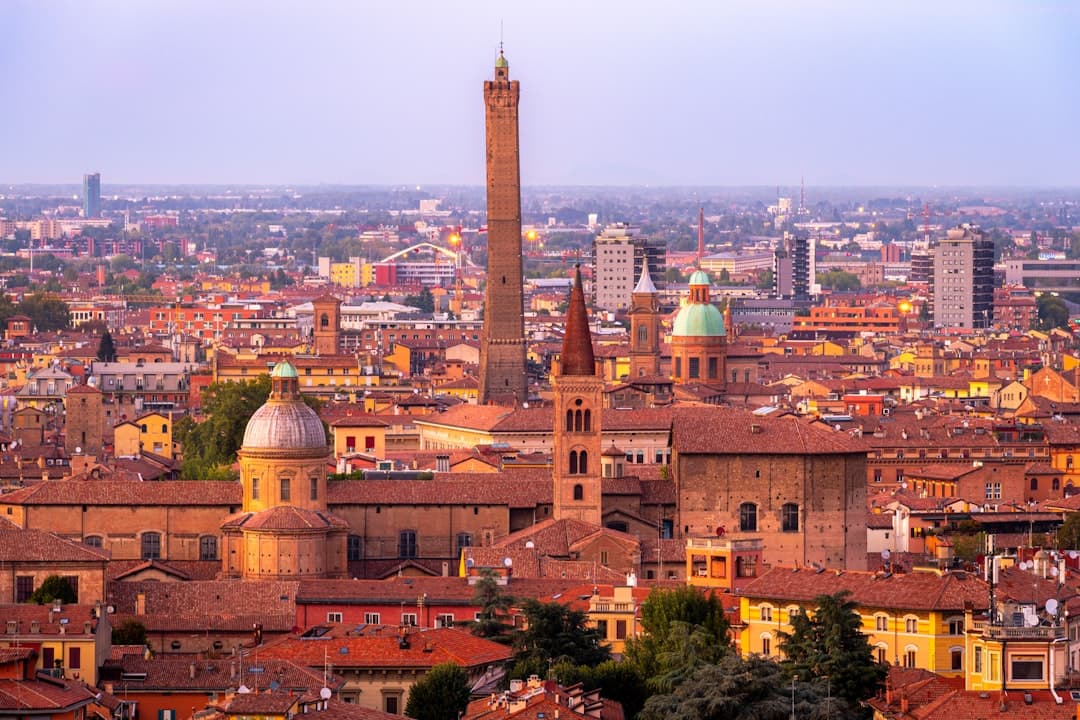
Need some ways to burn off those calories? There are a few must do things in bologna that involve actual physical effort. The big one is climbing the Asinelli Tower. It's the taller of the Two Towers leaning right in the middle of the city. (Yes, Bologna has leaning towers too, not just Pisa). It costs €5 to go up, and there are 498 steps. They are narrow, steep, and wooden. Your legs will burn. But the view from the top? You can see the red roofs stretching out to the hills. Just make sure to book your ticket online in advance because they sell out fast.
Some of the coolest things to see in bologna don't cost a dime. A crazy walk is the portico up to the Sanctuary of the Madonna di San Luca. It's the longest covered walkway in the world—3.8 kilometers of continuous arches going up a hill. It takes about an hour to walk up. Take a bottle of water. I did it last year in a sweater and regretted not wearing a t-shirt halfway up.
Did you know Bologna has the oldest continuously operating university in the western world? It started in 1088. That student energy completely shapes the city. If you walk down Via Zamboni, the main university street, you'll see graffiti everywhere. Some people hate it, but I think it adds grit. The bars around here are dirt cheap. You can grab a slice of pizza for €2 and a beer for about the same. It's loud, messy, and really fun.
Back to food for a second. If you want to eat like a local, skip the sit-down places one night and head to Mercato delle Erbe. It's the largest covered market in the historical center. During the day, it's just regular people buying their tomatoes and zucchini. But at night? The center of the market turns into this massive communal dining area. You grab a glass of Sangiovese from one stall, a board of cured meats from another, and just find an empty stool. It gets loud. Really loud. But it's the absolute best way to spend a Tuesday night. Expect to spend maybe €15-€20 total and leave completely stuffed.
Another huge reason to make this city your base camp is the transport links. Stepping off the train at the main bologna train station (Bologna Centrale) puts you at the spiderweb center of Italy's rail network. You can get to Florence in 35 minutes on the high-speed line. Or, when planning your bologna day trips, you can jump on a regional train and be in Modena in 20 minutes for under €5. Why go to Modena? Because of traditional balsamic vinegar. The real stuff that's aged for 25 years and costs €100 a tiny bottle. Or take a 50-minute train to Parma to see where Prosciutto di Parma actually comes from. It makes planning your trip so easy. You don't have to pack up your hotel room every two days. Just stay here, take day trips, and come back in time for dinner.
Let's talk about the evening routine. Around 6:00 PM, you'll notice everyone stops what they're doing and heads to a bar. This is aperitivo time. You buy a drink (usually a Spritz or a glass of wine for around €6 to €8), and they bring you food. I don't just mean a bowl of stale potato chips. Some bars will bring you tiny pizzas, bruschetta, cold cuts, and cheeses. Sometimes it's practically a whole dinner. A great spot for this is Via del Pratello. It's a long street packed entirely with pubs, wine bars, and small restaurants. It feels like the whole city is hanging out there on a Friday night.
If you're a bit lost on how to navigate the bus system or figure out tickets, the official bologna tourist information office (Bologna Welcome) is right in Piazza Maggiore, basically underneath the huge Basilica of San Petronio. Oh, speaking of that church—it's massive, but the front facade is only half finished. They started building it in 1390, ran out of money, and just left the top half as bare brick. It looks incredibly weird, but that's what makes it so cool. You can't miss it.
What I really love about Bologna is that it doesn't feel like a museum. Florence sometimes feels like it exists just for tourists. Bologna feels lived in. You'll see students drinking €3 Aperol Spritzes in Piazza Verdi, older guys arguing about football in the cafes, and business people rushing around on bicycles. It's authentic. Just grab a table outside, order some local Pignoletto wine (it's slightly sparkling and super cheap), and watch the city go by. You won't want to leave.